
 10 min reading
Most crypto payment systems look stable at first. They process small volumes, show fast transactions, and seem reliable. But the picture changes when real scale appears. Payments grow, flows become complex, and hidden weaknesses start to surface. What worked in a test environment begins to break under pressure. Delays, mismatched balances, and routing errors become common. The issue is not the blockchain itself. The real problem lies deeper, inside how these systems are built and managed.
Why crypto payment processing breaks at scale, not at launch
At first, everything looks simple. A few test payments go through without issues. Funds arrive fast, balances update, and the system feels reliable. It creates the impression that the setup is ready for real use. Many teams stop questioning things at this point. But this early stability can be misleading. It reflects a controlled environment, not real-world conditions. The real test only starts when volume grows and behavior becomes less predictable.
The first cracks usually appear in small details. A deposit address works fine for a handful of users. Then traffic grows, and suddenly there are hundreds or thousands of incoming transfers. Each one needs to be tracked and matched correctly. Some arrive late, some come through unexpected blockchain network routes. Internal records do not always align with what happens on-chain. At this stage, crypto payment processing starts to show where it is fragile. These are not dramatic failures, but they build up over time and slow everything down.
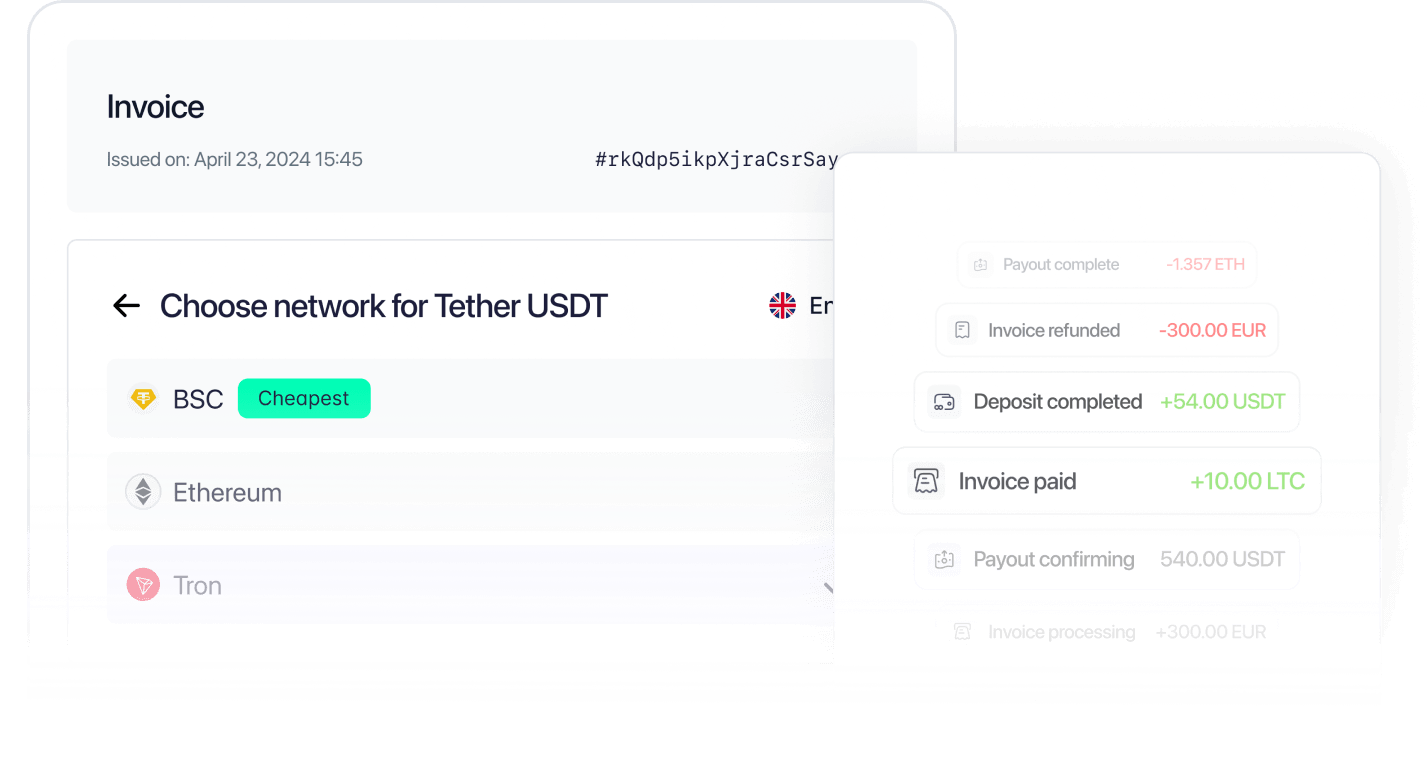
Another issue comes from network differences that are easy to ignore early on. Tokens like USDT TRC20 and USDC ERC20 may seem interchangeable to a user. In reality, they behave differently and require sep»arate handling. A wrong choice of network can lead to delays or even lost funds. When volumes are low, teams often catch these mistakes manually. At scale, that is no longer realistic. Systems need to detect, route, and verify everything automatically. This is where crypto payment processing becomes less about transactions and more about control.
There is also a deeper problem in how many platforms are designed. They are built to launch fast, not to grow safely. The focus is often on integration speed and user interface. That works in the beginning and helps attract users. But it does not prepare the system for stress. Real scale requires stricter rules, clear logic, and better handling of edge cases. Cold wallet crypto storage, internal checks, and consistent tracking become essential. Without them, growth does not feel like success. It feels like pressure that the system was never ready to handle.
In the end, nothing suddenly breaks in one moment. It happens gradually, as more volume passes through the same weak points. The blockchain keeps working as expected. The issues come from everything built around it. This is why crypto payment processing rarely fails during testing. It fails later, when the system has to operate in real conditions and keep up with real demand.
The hidden bottleneck: Reconciliation, not transaction speed
Many people think speed is the main advantage of crypto payments. Transactions can move in seconds, and fees often stay low. This creates a strong belief that faster payments solve most problems. In reality, speed is only a small part of the system. The real challenge starts after the transaction is complete. Businesses still need to confirm, record, and understand each movement of funds. This is where things begin to slow down. Crypto payment processing often struggles not with sending funds, but with making sense of them.
When a company receives payments, it must match each transfer to a user or order. This sounds simple, but it quickly becomes complex. A single deposit address can receive many transactions at once. Some payments arrive in parts, others are delayed by the blockchain network. Internal systems may show one balance, while on-chain data shows another. These gaps create confusion and require manual checks. Over time, this slows down operations and increases risk. Without proper reconciliation, even fast payments lose their value.
Another issue comes from how different assets and networks are handled. A payment in USDT TRC20 does not behave the same as one in USDC ERC20. Each requires separate tracking and validation. Mistakes in network identification can lead to mismatched records. At scale, these small errors become frequent. Teams can no longer rely on manual fixes. They need systems that automatically verify and align every transaction. This is where crypto payment processing must go beyond speed and focus on accuracy.
The deeper problem is that many systems treat transactions as isolated events. They do not connect them to a broader financial picture. Businesses need to integrate payment data with accounting, reporting, and treasury tools. Every movement should reflect in real balances and financial statements. Without this link, companies lose visibility over their funds. The system may look fast, but it becomes unreliable.
In practice, trust depends more on correct records than on quick transfers.
As volume grows, reconciliation becomes the main bottleneck. It is not visible to users, but it defines how the system performs. Payments that cannot be tracked or verified create uncertainty. This forces teams to slow down operations and add extra controls. In the end, the speed of a transaction does not matter if the business cannot confidently use the funds. This is why crypto payment processing must solve reconciliation first, not just focus on moving money faster.
What scalable crypto payment infrastructure actually requires
Growth changes everything inside a financial system. Early setups often rely on simple logic and limited controls. As volume rises, each transaction adds pressure to the structure. Systems must track flows across many users and regions. A single error can affect multiple balances at once. Without strong coordination, issues spread quickly across the platform. That is why crypto payment processing at scale depends on structure, not speed.
A stable system needs clear rules for how funds move and where they are stored. Each deposit address must connect to internal records without gaps. Cold wallet crypto storage becomes important for security and risk control. At the same time, part of the balance must stay available for daily operations. Managing that split is not easy when volumes grow fast. Systems must also handle different blockchain network conditions without manual input. Without automation, teams lose control over flow consistency and accuracy.
In practice, companies start looking for platforms that already solve these challenges. A crypto payment platform such as Sheepy focuses on helping businesses accept crypto assets while keeping flows organized. It connects transaction data with internal systems and supports consistent handling across networks. That reduces the need for manual checks and lowers the chance of mismatched balances. It also helps manage deposit address logic and routing without adding complexity for the team. For many businesses, solutions like that become a way to move from basic setups to structured operations. As scale increases, crypto payment processing becomes easier to manage when infrastructure is built with control in mind.
Another key element is how systems react to unexpected events. Delays, network congestion, or unusual transaction patterns can appear at any time. A strong platform must detect and handle these cases without breaking the flow. That includes monitoring balances, verifying inputs, and adjusting internal logic when needed. Without these layers, growth introduces risk instead of value. In the end, scale rewards systems that are built for stability from the beginning.
Network fragmentation: How USDT TRC20, USDC ERC20 and others create risk
Different networks look simple on the surface. Users see the same token name and expect identical behavior. In reality, each blockchain network follows its own logic. USDT TRC20 works in one environment, while USDC ERC20 runs on another. Fees, speed, and confirmation rules can vary a lot. A small mistake in network choice can lead to serious issues. Funds may arrive late or become hard to recover. Crypto payment processing becomes fragile when these differences are ignored.
At low volume, teams often manage network selection by hand. Someone checks each transfer and confirms details before moving forward. This approach works in small setups with limited activity. As volume grows, manual checks slow everything down. Errors start to appear more often, especially with repeated flows. A wrong deposit address or mismatched network creates confusion inside records. Internal balances may no longer match real data on chain. Crypto payment processing then turns into a constant effort to fix inconsistencies.
Another layer of risk comes from how users interact with crypto assets. Not every user understands network differences. Some send USDT BEP20 instead of TRC20 without noticing the gap. Others reuse an old deposit address linked to a different chain. These actions create edge cases that are hard to predict. A platform must detect and route each transaction correctly. Without strong validation, small mistakes multiply into larger operational issues.
Reliable infrastructure reduces these risks through strict control and clear logic. Each deposit address must connect to a specific blockchain network with no ambiguity. Automated checks help catch mismatched inputs before they affect balances. At scale, accuracy matters more than speed. Teams need tools that manage complexity without constant manual work. In the end, fragmentation across networks does not disappear. It must be handled with precision at every stage.
Compliance vs speed: Why regulation slows down crypto payment processing
At first glance, crypto feels fast and almost frictionless. Transfers move quickly, and the process seems simple. Many expect that this speed will stay the same at any scale. But reality looks different once regulation comes into play. Each transfer still needs to be checked and verified. Identity, source of funds, and risk level all matter. These checks do not disappear just because the asset is digital. Crypto payment processing starts to slow down the moment these controls become active.
The situation changes even more as volume increases. A small number of users is easy to monitor. Once activity grows, patterns become harder to track. Some transactions look normal at first, then raise questions later. Others may come from regions with stricter rules. Teams cannot rely on manual checks anymore. They need tools that review flows in real time and react without delay.
Crypto payment processing becomes a balance between keeping things moving and making sure nothing risky slips through.
There is also the issue of different rules across regions. What works in one country may not be accepted in another. A transfer can be valid in one place and require extra checks somewhere else. This creates friction that is not always visible to the user. Behind the scenes, systems must adjust and apply the right logic. Even a simple transaction can pass through several layers of validation. As a result, speed becomes less predictable.
The real challenge is not regulation itself, but how it is handled. Weak setups treat compliance as an extra step added on top. Strong infrastructure builds it into the core flow. Automated checks, clear records, and consistent logic help reduce delays. When done right, control does not feel like a barrier. It becomes part of how the system stays stable under pressure.
Scale shows what was hidden
Most systems do not fail at the start. They fail when pressure builds and small gaps turn into real risks. Speed, low fees, and clean interfaces look convincing early on. But scale brings complexity that simple setups cannot handle. Flows become harder to track, networks behave differently, and control becomes critical. What seemed efficient starts to slow down or break. In the end, growth does not create problems. It reveals them. Only well-designed infrastructure can handle that moment without losing stability.
Sheepy helps leading iGaming, FX, and E-commerce brands grow their crypto payments - trusted since 2022.


'%3e%3cpath%20d='M5.33337%2017.3333C5.76671%2020.7093%207.84137%2023.708%2010.6667%2025.3333'%20stroke='%231C1D3B'%20stroke-width='2'%20stroke-linecap='round'%20stroke-linejoin='round'/%3e%3cpath%20d='M26.6667%2014.6667C26.3406%2012.3203%2025.2521%2010.1462%2023.5688%208.47934C21.8856%206.81246%2019.701%205.74524%2017.3516%205.44209C15.0021%205.13893%2012.6182%205.61666%2010.5669%206.80168C8.51571%207.98669%206.911%209.81326%206%2012'%20stroke='%231C1D3B'%20stroke-width='2'%20stroke-linecap='round'%20stroke-linejoin='round'/%3e%3cpath%20d='M5.33337%206.66666V12H10.6667'%20stroke='%231C1D3B'%20stroke-width='2'%20stroke-linecap='round'%20stroke-linejoin='round'/%3e%3cpath%20d='M16%2020H18.6667C19.0203%2020%2019.3594%2020.1405%2019.6095%2020.3905C19.8595%2020.6406%2020%2020.9797%2020%2021.3333V22.6667C20%2023.0203%2019.8595%2023.3594%2019.6095%2023.6095C19.3594%2023.8595%2019.0203%2024%2018.6667%2024H17.3333C16.9797%2024%2016.6406%2024.1405%2016.3905%2024.3905C16.1405%2024.6406%2016%2024.9797%2016%2025.3333V26.6667C16%2027.0203%2016.1405%2027.3594%2016.3905%2027.6095C16.6406%2027.8595%2016.9797%2028%2017.3333%2028H20'%20stroke='%231C1D3B'%20stroke-width='2'%20stroke-linecap='round'%20stroke-linejoin='round'/%3e%3cpath%20d='M24%2020V22.6667C24%2023.0203%2024.1405%2023.3594%2024.3905%2023.6095C24.6406%2023.8595%2024.9797%2024%2025.3333%2024H26.6667'%20stroke='%231C1D3B'%20stroke-width='2'%20stroke-linecap='round'%20stroke-linejoin='round'/%3e%3cpath%20d='M28%2020V28'%20stroke='%231C1D3B'%20stroke-width='2'%20stroke-linecap='round'%20stroke-linejoin='round'/%3e%3c/g%3e%3cdefs%3e%3cclipPath%20id='clip0_17690_160'%3e%3crect%20width='32'%20height='32'%20fill='white'/%3e%3c/clipPath%3e%3c/defs%3e%3c/svg%3e)
'%3e%3cpath%20d='M10.6667%208.00001C10.6667%207.29277%2010.9477%206.61449%2011.4478%206.11439C11.9479%205.61429%2012.6262%205.33334%2013.3334%205.33334H24.0001C24.7073%205.33334%2025.3856%205.61429%2025.8857%206.11439C26.3858%206.61449%2026.6667%207.29277%2026.6667%208.00001V18.6667C26.6667%2019.3739%2026.3858%2020.0522%2025.8857%2020.5523C25.3856%2021.0524%2024.7073%2021.3333%2024.0001%2021.3333H13.3334C12.6262%2021.3333%2011.9479%2021.0524%2011.4478%2020.5523C10.9477%2020.0522%2010.6667%2019.3739%2010.6667%2018.6667V8.00001Z'%20stroke='%231C1D3B'%20stroke-width='2'%20stroke-linecap='round'%20stroke-linejoin='round'/%3e%3cpath%20d='M5.33337%2013.3333C5.33337%2012.6261%205.61433%2011.9478%206.11442%2011.4477C6.61452%2010.9476%207.2928%2010.6667%208.00004%2010.6667H18.6667C19.374%2010.6667%2020.0522%2010.9476%2020.5523%2011.4477C21.0524%2011.9478%2021.3334%2012.6261%2021.3334%2013.3333V24C21.3334%2024.7072%2021.0524%2025.3855%2020.5523%2025.8856C20.0522%2026.3857%2019.374%2026.6667%2018.6667%2026.6667H8.00004C7.2928%2026.6667%206.61452%2026.3857%206.11442%2025.8856C5.61433%2025.3855%205.33337%2024.7072%205.33337%2024V13.3333Z'%20stroke='%231C1D3B'%20stroke-width='2'%20stroke-linecap='round'%20stroke-linejoin='round'/%3e%3c/g%3e%3cdefs%3e%3cclipPath%20id='clip0_17690_177'%3e%3crect%20width='32'%20height='32'%20fill='white'/%3e%3c/clipPath%3e%3c/defs%3e%3c/svg%3e)