4 min reading
Bulgaria operates within the EU-wide regulatory framework for crypto assets established by MiCA, alongside national rules under the Markets in Crypto-Assets Act. The Financial Supervision Commission (FSC) is the main competent authority for crypto-asset service providers in Bulgaria, while the Bulgarian National Bank (BNB) has responsibilities for e-money tokens and certain entities under its supervision.
Businesses looking to accept crypto payments in Bulgaria can use payment infrastructure such as a crypto payment gateway, APIs, plugins, or invoicing tools. The regulatory requirements that apply depend on the services provided, the payment model, and the role of each provider.
Crypto payments for businesses in Bulgaria
Bulgaria is part of the EU single market and operates within the EU regulatory framework for crypto assets. For businesses evaluating payment options in Bulgaria, crypto can represent an additional payment method alongside established payment methods.

Crypto payments in Bulgaria can provide an additional payment method for cross-border transactions without relying exclusively on traditional payment rails. This can be relevant for businesses serving customers across multiple EU and international markets.
Businesses in sectors such as software development, SaaS, outsourcing, and other digital services may consider crypto payments as part of their payment infrastructure, depending on their business model and customer base. Businesses considering whether to accept crypto payments in Bulgaria should assess factors such as customer demand, integration requirements, settlement options, supported assets, and the regulatory requirements applicable to their activities.
Legal status of crypto payments in Bulgaria
Crypto assets and crypto-asset services in Bulgaria are subject to the EU-wide MiCA framework and applicable national legislation. The regulatory treatment of a crypto asset depends on its characteristics, legal classification, and the activities or services involved.

The Financial Supervision Commission (FSC) is the main competent authority for crypto-asset service providers under Bulgaria’s MiCA framework. The Bulgarian National Bank (BNB) has responsibilities relating to e-money tokens and certain financial institutions that fall within its supervisory remit.
MiCA is fully applicable in Bulgaria, alongside national legislation implementing the country’s supervisory and administrative framework for crypto assets. Bulgaria’s transitional period for existing crypto-asset service providers ended on 1 July 2026.
Businesses considering how to accept Bitcoin payments in Bulgaria should assess the regulatory requirements applicable to their payment model, the services involved, and the providers they use. Depending on the activities involved, requirements may arise under MiCA, national legislation, and other applicable financial and AML rules.
How to accept crypto payments in Bulgaria
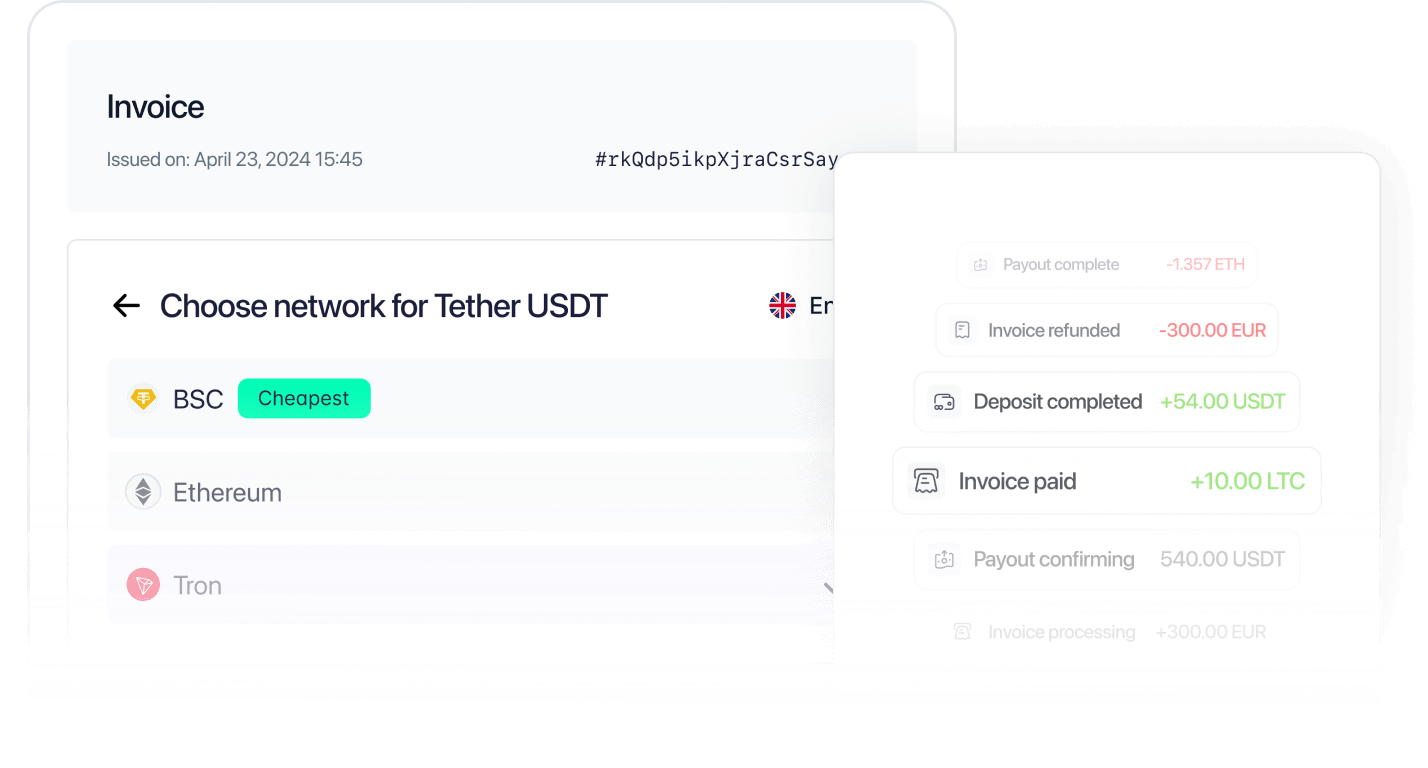
Businesses looking to accept crypto payments in Bulgaria can use a crypto payment gateway or integrate payment functionality through APIs, plugins, or invoicing tools. The available setup and integration options depend on the provider, payment model, and services supported.
In a typical crypto payment flow, customers may pay using Bitcoin, USDT, or other supported assets. Depending on the payment infrastructure, the payment may involve a transaction recorded on a blockchain, while settlement may be received in crypto or converted into euros where this option is available.
When evaluating crypto payment processing in Bulgaria, businesses should consider factors such as integration requirements, custody arrangements, security, transaction monitoring, settlement options, and the regulatory status of the services involved.

Businesses exploring how to accept USDT payments in Bulgaria may consider stablecoins as part of their payment and settlement setup, depending on the assets, settlement options, and services supported by their provider.
Fees and settlement
The cost structure and settlement process for crypto payments differ from traditional payment methods. Transaction fees and settlement times depend on factors such as the blockchain network, crypto asset, payment provider, conversion requirements, and settlement model.
Depending on the payment provider and settlement model, businesses accepting crypto payments in Bulgaria may receive funds in cryptocurrency or convert supported assets into euros. Available settlement options vary depending on the provider and services involved.
Stablecoins such as USDT are designed to maintain a relatively stable value compared with more volatile crypto assets. Businesses that accept USDT payments in Bulgaria may use stablecoins as part of their payment and settlement model, subject to the assets and settlement options supported by their provider. Depending on the provider, a crypto payment gateway may support functions such as asset conversion, settlement, transaction monitoring, and reporting.
Use cases in Bulgaria
Crypto payments can be used across sectors such as IT, software development, outsourcing, e-commerce, and digital services. Businesses serving international customers may offer crypto alongside established payment methods as an additional option for cross-border transactions.
The role of crypto payment processing in Bulgaria varies depending on the business model, customer base, supported assets, and markets involved. Businesses evaluating whether to accept crypto payments in Bulgaria should consider how crypto would fit alongside their existing payment methods and operational requirements.
What businesses should consider
Businesses evaluating crypto payments in Bulgaria should consider the payment infrastructure they plan to use, supported assets, settlement options, operational requirements, and the regulatory obligations relevant to their activities. These factors may vary depending on the business model, provider, and services involved.
Disclaimer: This guide is provided for general informational purposes only and does not constitute legal, regulatory, or financial advice. Regulatory requirements may vary depending on the jurisdiction and specific circumstances.