
 9 min reading
For years, the discussion around crypto payments focused on a simple choice: fiat or stablecoins. Today, that question matters far less than it once did. Businesses now move value through a growing mix of banks, blockchain networks, payment providers, and digital assets. In many cases, a single transaction can touch several settlement rails before reaching its final destination. The real shift is not about choosing one form of money over another. It is about building settlement infrastructure that can connect them all.
Why the fiat vs stablecoin debate is becoming outdated
Not long ago, businesses entering the digital asset space faced what seemed like a clear choice. Should they settle payments in fiat currency or use crypto-based alternatives? The discussion was often framed as a contest between banks and blockchain networks. That view made sense when crypto was still seen mainly as an investment asset. Today, the focus is no longer on choosing sides.
The market has changed in a more interesting way. Stablecoins did not remove traditional banking from payment flows. They added another route for moving value. Rather than replacing old financial systems, digital asset infrastructure has become more connected with them. This is why a modern crypto payment gateway is no longer just a tool for accepting crypto payments.
Businesses now care less about the form of money and more about how money moves. They need fast access to funds. They need fewer delays in cross-border payments. They also need room to switch between currencies, banks, and settlement rails when conditions change. That need for optionality is becoming a core part of payment infrastructure.

A few years ago, many companies saw stablecoins as a faster version of a bank transfer. Some even viewed them as a direct rival to fiat settlement. That is not what the market is showing now. Stablecoins are becoming part of the settlement layer itself. In many cases, they help money move between companies before the end user ever notices.
This is why the old fiat-versus-stablecoin debate feels too narrow. The question is no longer which settlement model will win. The real question is whether a payment system can deliver speed, liquidity, and flexibility at the same time. A strong crypto payment gateway must support that shift. It has to connect different rails, not force businesses into one path.
What businesses really need from modern settlement systems
Ask most businesses what they want from a payment system and the answer sounds simple. Faster payments. Lower costs. Fewer delays. Yet those priorities often change once a company starts selling in several markets. Payments may arrive on time, but that does not mean the money is where the business needs it. For many finance teams, the bigger challenge starts after the transaction is complete.
Talk to companies operating across Europe, Asia, and Latin America, and a familiar pattern appears. The challenges are rarely the same from one market to another. In some regions, access to local currency settlement matters most. In others, businesses care more about the speed of international transfers or reliable access to USD liquidity. Customer expectations also vary from country to country. As a result, payment operations often become more complex as a business grows. This is one reason a modern crypto payment gateway increasingly serves as a connection point between different settlement environments rather than simply a payment acceptance tool.
Liquidity is another area where expectations have shifted. A few years ago, many businesses focused on getting paid faster. Today, they are often focused on using those funds faster. There is an important difference. Money can reach an account quickly and still remain difficult to deploy. It may sit in the wrong currency, the wrong market, or the wrong banking environment. When that happens, transaction speed stops being the main concern.
This explains why flexibility has become such a valuable part of modern payment infrastructure.
Companies no longer expect a single settlement model to solve every challenge. They expect options. Some transactions may work best through banking rails. Others may move more efficiently through digital asset networks. A reliable crypto payment gateway allows businesses to make those choices without rebuilding their entire payment stack. In a changing market, optionality can be more valuable than marginal gains in processing speed.
How stablecoins are reshaping payment infrastructure
A few years ago, many people viewed stablecoins as digital versions of traditional money. The expectation was simple. They would compete with banks and replace some old financial processes. That prediction did not play out in such a clean way. Instead, stablecoins became part of the deeper settlement layer behind value movement. This shift matters because the user may never see it directly.
One reason for this change is that stablecoins solve a more practical problem. They make it easier to move liquidity between markets, firms, and digital platforms. A transaction may begin in fiat, pass through a stablecoin settlement rail, and end in another fiat currency. The customer may never notice that process. For the business, however, the route can affect cost, timing, and access to funds. This is where a crypto payment gateway can support more than simple checkout. It can help connect several settlement paths within one flow.
The same pattern is appearing across wider financial infrastructure. Banks are testing tokenized deposits. Financial firms are exploring digital settlement tools. Technology providers are building systems that link blockchain networks with traditional rails. None of this means banks disappear. It means the space between banking and digital assets is becoming more connected. In that environment, a crypto payment gateway increasingly acts as the interface between different settlement environments.
That connection is the real story. Stablecoins are no longer just a separate option for companies that want to use digital assets. They are becoming one of several rails that can support global value movement. A business may still want fiat settlement for accounting, tax, or local needs. It may also want stablecoin rails for speed and liquidity. A crypto payment gateway becomes more useful when it can support both. This growing connectivity is one reason many businesses are moving toward hybrid settlement strategies.
Why hybrid settlement models are gaining momentum
For a long time, businesses felt pressure to choose a single approach. Some preferred traditional banking channels because they were familiar and widely accepted. Others explored digital assets in search of faster settlement and easier access to global markets. Today, that choice is becoming less important. More companies are discovering that different forms of infrastructure can work together. This is one reason hybrid settlement models are gaining attention across many industries.
The idea is simple. A business does not have to rely on one rail for every transaction. A customer may complete a transaction using a local currency. Value may then move through a stablecoin-based settlement layer before reaching its final destination. The receiving company may ultimately hold funds in fiat currency. Each stage serves a different purpose. The goal is not to promote one form of money over another.
The goal is to use the most efficient route for each part of the process.
This approach is becoming easier as financial infrastructure grows more connected. Stablecoin networks, banking systems, and digital asset platforms no longer operate in complete isolation. The boundaries between them are becoming less visible. A modern crypto payment gateway can help businesses access these different environments without creating unnecessary complexity. Instead of forcing companies into a single model, it allows them to choose the combination that best supports their operational needs.
The deeper reason behind this trend is that no single settlement rail is optimized for every market, currency, and business model. What works well in one situation may create limitations in another. A banking network may offer familiarity and regulatory comfort. A stablecoin rail may provide faster access to liquidity across borders. Hybrid infrastructure allows businesses to use the strengths of each system while reducing their limitations. That is why many companies see hybrid settlement not as a compromise, but as a practical evolution of financial infrastructure.
The result is a more flexible approach to moving value across markets. Businesses are becoming less interested in replacing one system with another. They are becoming more interested in connecting different systems in ways that support growth. A reliable crypto payment gateway plays an important role in that process. As settlement options continue to expand, the ability to coordinate multiple rails may become more valuable than access to any single rail alone.
From payment gateways to liquidity orchestrators
Not long ago, the role of a payment provider was relatively straightforward. A business accepted funds from a customer, processed the transaction, and received the proceeds. The infrastructure behind that process was important, but it rarely attracted much attention. Today, the situation looks very different. Companies operate across multiple markets, currencies, and settlement environments. As a result, the challenge is no longer limited to processing transactions. The challenge is coordinating how value moves across an increasingly connected financial ecosystem.
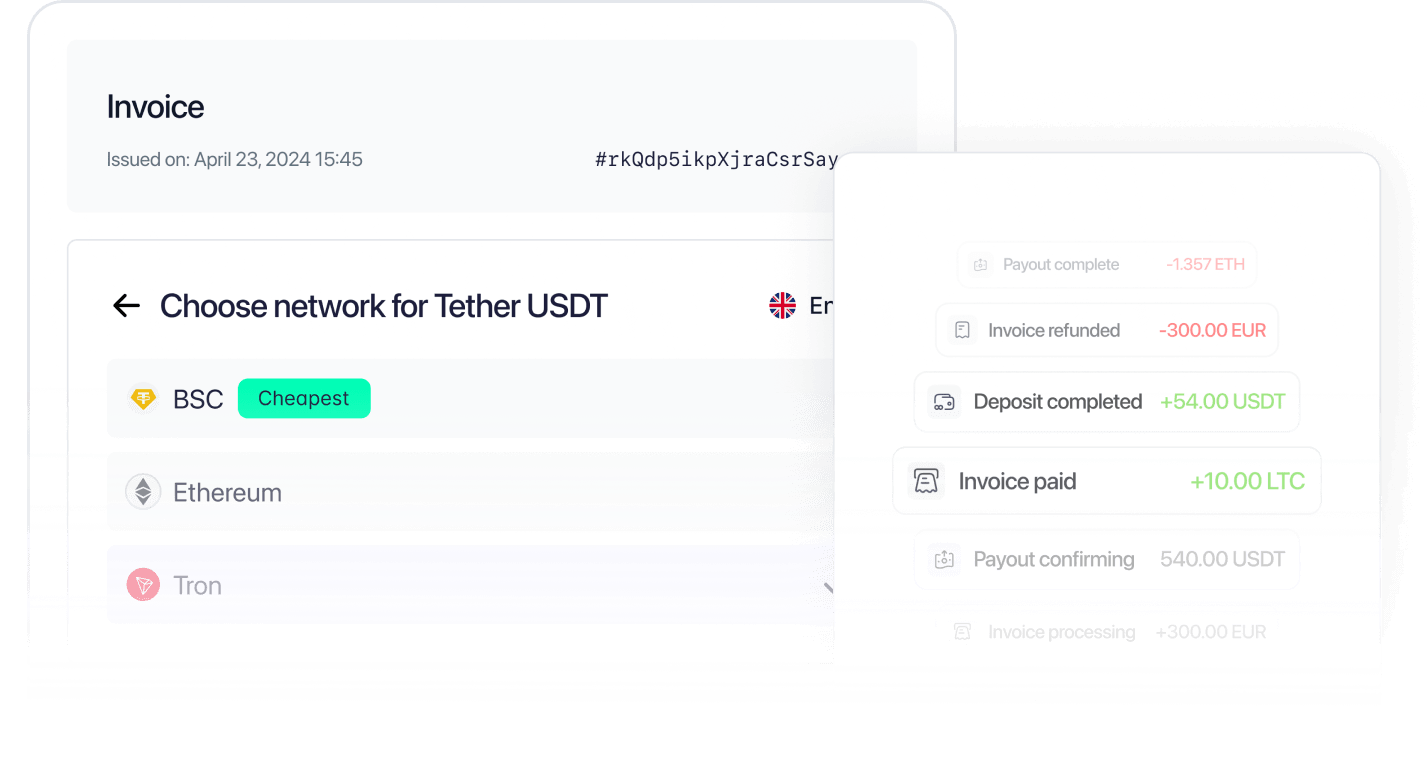
This shift is changing expectations. Businesses no longer look only for access to different rails. They want the ability to use those rails efficiently. Funds may arrive through one channel, move through another, and ultimately settle somewhere else. Liquidity may need to be transferred between regions, currencies, or business units. A modern crypto payment gateway is increasingly expected to support those decisions rather than simply facilitate the initial transaction. The focus is moving from processing activity to managing financial flows.
This evolution is happening because financial infrastructure is becoming more complex. Stablecoin networks, banking systems, tokenized assets, and digital settlement tools are all becoming part of the same environment. The value of a platform no longer depends only on the number of supported assets or jurisdictions. It depends on how effectively those elements work together. Businesses want fewer operational barriers and greater visibility into where liquidity sits at any given moment. They also want the flexibility to respond quickly when market conditions change.
In this environment, orchestration becomes more important than access. A company may already have access to banks, digital assets, and several settlement rails. The real advantage comes from coordinating those resources in an efficient way. A reliable crypto payment gateway can help connect different parts of that infrastructure while reducing friction between them. As hybrid settlement models continue to mature, the most valuable platforms may not be those offering the most rails. They may be the ones that help businesses make the best use of every rail available.
The real advantage
The future of settlement is unlikely to belong to a single rail, network, or asset. Businesses are gaining access to more options than ever before, and that is changing how financial infrastructure is built. The most successful companies will not be those choosing between fiat and stablecoins. They will be the ones combining both in ways that improve liquidity, efficiency, and resilience. In that environment, a modern crypto payment gateway becomes more than a connection point. It becomes a tool for navigating an increasingly interconnected financial world.
Sheepy helps leading iGaming, FX, and E-commerce brands grow their crypto payments - trusted since 2022.


'%3e%3cpath%20d='M5.33337%2017.3333C5.76671%2020.7093%207.84137%2023.708%2010.6667%2025.3333'%20stroke='%231C1D3B'%20stroke-width='2'%20stroke-linecap='round'%20stroke-linejoin='round'/%3e%3cpath%20d='M26.6667%2014.6667C26.3406%2012.3203%2025.2521%2010.1462%2023.5688%208.47934C21.8856%206.81246%2019.701%205.74524%2017.3516%205.44209C15.0021%205.13893%2012.6182%205.61666%2010.5669%206.80168C8.51571%207.98669%206.911%209.81326%206%2012'%20stroke='%231C1D3B'%20stroke-width='2'%20stroke-linecap='round'%20stroke-linejoin='round'/%3e%3cpath%20d='M5.33337%206.66666V12H10.6667'%20stroke='%231C1D3B'%20stroke-width='2'%20stroke-linecap='round'%20stroke-linejoin='round'/%3e%3cpath%20d='M16%2020H18.6667C19.0203%2020%2019.3594%2020.1405%2019.6095%2020.3905C19.8595%2020.6406%2020%2020.9797%2020%2021.3333V22.6667C20%2023.0203%2019.8595%2023.3594%2019.6095%2023.6095C19.3594%2023.8595%2019.0203%2024%2018.6667%2024H17.3333C16.9797%2024%2016.6406%2024.1405%2016.3905%2024.3905C16.1405%2024.6406%2016%2024.9797%2016%2025.3333V26.6667C16%2027.0203%2016.1405%2027.3594%2016.3905%2027.6095C16.6406%2027.8595%2016.9797%2028%2017.3333%2028H20'%20stroke='%231C1D3B'%20stroke-width='2'%20stroke-linecap='round'%20stroke-linejoin='round'/%3e%3cpath%20d='M24%2020V22.6667C24%2023.0203%2024.1405%2023.3594%2024.3905%2023.6095C24.6406%2023.8595%2024.9797%2024%2025.3333%2024H26.6667'%20stroke='%231C1D3B'%20stroke-width='2'%20stroke-linecap='round'%20stroke-linejoin='round'/%3e%3cpath%20d='M28%2020V28'%20stroke='%231C1D3B'%20stroke-width='2'%20stroke-linecap='round'%20stroke-linejoin='round'/%3e%3c/g%3e%3cdefs%3e%3cclipPath%20id='clip0_17690_160'%3e%3crect%20width='32'%20height='32'%20fill='white'/%3e%3c/clipPath%3e%3c/defs%3e%3c/svg%3e)
'%3e%3cpath%20d='M10.6667%208.00001C10.6667%207.29277%2010.9477%206.61449%2011.4478%206.11439C11.9479%205.61429%2012.6262%205.33334%2013.3334%205.33334H24.0001C24.7073%205.33334%2025.3856%205.61429%2025.8857%206.11439C26.3858%206.61449%2026.6667%207.29277%2026.6667%208.00001V18.6667C26.6667%2019.3739%2026.3858%2020.0522%2025.8857%2020.5523C25.3856%2021.0524%2024.7073%2021.3333%2024.0001%2021.3333H13.3334C12.6262%2021.3333%2011.9479%2021.0524%2011.4478%2020.5523C10.9477%2020.0522%2010.6667%2019.3739%2010.6667%2018.6667V8.00001Z'%20stroke='%231C1D3B'%20stroke-width='2'%20stroke-linecap='round'%20stroke-linejoin='round'/%3e%3cpath%20d='M5.33337%2013.3333C5.33337%2012.6261%205.61433%2011.9478%206.11442%2011.4477C6.61452%2010.9476%207.2928%2010.6667%208.00004%2010.6667H18.6667C19.374%2010.6667%2020.0522%2010.9476%2020.5523%2011.4477C21.0524%2011.9478%2021.3334%2012.6261%2021.3334%2013.3333V24C21.3334%2024.7072%2021.0524%2025.3855%2020.5523%2025.8856C20.0522%2026.3857%2019.374%2026.6667%2018.6667%2026.6667H8.00004C7.2928%2026.6667%206.61452%2026.3857%206.11442%2025.8856C5.61433%2025.3855%205.33337%2024.7072%205.33337%2024V13.3333Z'%20stroke='%231C1D3B'%20stroke-width='2'%20stroke-linecap='round'%20stroke-linejoin='round'/%3e%3c/g%3e%3cdefs%3e%3cclipPath%20id='clip0_17690_177'%3e%3crect%20width='32'%20height='32'%20fill='white'/%3e%3c/clipPath%3e%3c/defs%3e%3c/svg%3e)