
 10 min reading
Payments are still coming in. Customers are still checking out. Yet a merchant suddenly loses access to part of its funds. There is no system outage, no blockchain failure, and no obvious warning sign. The issue turns out to be a routine compliance review. Situations like this highlight a reality many businesses overlook: the biggest threat to payment operations is not always downtime. In many cases, it is the loss of control over the infrastructure that moves money, settles transactions, and keeps business running.
The hidden cost of relying on a single payment provider
Ask a merchant why they keep a backup payment provider, and the answer is usually predictable. Most people immediately think about outages. If a platform goes down, payments stop, customers leave, and revenue disappears. It is a reasonable concern, but it is not always the one that causes the biggest problems.
The more interesting risks often appear when nothing seems to be wrong. Payments continue to arrive. Dashboards look normal. Customers complete transactions without noticing any difference. Then a business discovers that settlement times have changed, a payout route is no longer available, or additional verification is suddenly required before certain funds can be moved. The payment flow still works, yet the merchant has less control than it did a week earlier.
This is one reason why businesses have started looking at a crypto payment provider differently.
Reliability still matters, but uptime is no longer the only question. Merchants also want to know how quickly they can adapt if requirements shift, if supported regions are revised, or if access to particular digital assets becomes more limited. Those situations may not generate headlines, but they can create real operational friction.
The challenge becomes more obvious as companies grow. A startup processing a small number of transactions can often work comfortably with a single partner. A business serving customers across multiple markets usually has different priorities. It depends on predictable settlements, stable access to payment services, and the ability to react when new rules take effect. Relying entirely on one crypto payment provider can make those adjustments harder than many merchants expect.
That does not mean a single provider is inherently risky. It means every dependency deserves attention. The question is no longer whether a payment platform works today. The more important question is what happens when the rules, requirements, or business environment look different tomorrow.
The risks that can disrupt payments without warning
It is easy to assume that payment disruptions arrive with obvious warning signs. A platform goes offline, transactions fail, support teams start receiving complaints. Those situations certainly happen, but they are not always the events merchants talk about afterward. In many cases, the more disruptive problems develop quietly. Payments continue to flow, customers see no visible issue, and yet important parts of the payment process begin to change behind the scenes.

Compliance reviews rarely make headlines. Yet they can change the way a merchant operates almost overnight. A routine review, an updated risk policy, or additional verification requirements can affect how certain services are used. None of these actions automatically mean something is wrong. They are often part of normal business operations. The challenge is that they can create delays, restrictions, or additional administrative work at moments when a company expects business to continue as usual.
The real surprise often comes later. Receiving payments is only part of the equation. Accessing funds, converting assets, and managing settlements are equally important. A business may discover that withdrawals are taking longer than expected or that a familiar settlement route is no longer available. Customers rarely notice these changes. Finance teams do. What begins as a small operational adjustment can quickly become a cash flow concern if alternatives are not already in place.
Regional access creates another layer of uncertainty.
A market that was available yesterday may require additional checks tomorrow. Certain industries may face new restrictions, while support for specific assets or blockchain networks may evolve over time. None of this is unique to a particular company. It reflects the reality of operating in a sector shaped by regulation, compliance obligations, and shifting market conditions.
This is one reason merchants often evaluate more than the feature set of a single crypto payment provider. They look at adaptability. They want to understand how quickly a partner can respond to change and how much room remains available when new requirements emerge.
The interesting part is that most of these risks are not technical at all. Servers can remain online and transactions can continue processing. Yet a business may still find itself with fewer options than before. That possibility explains why choosing a crypto payment provider is increasingly viewed as an infrastructure decision rather than a simple payment integration.
Building flexibility into your payment stack
After a while, most merchants reach the same conclusion. The question is no longer whether a provider works well today. The real question is what happens when circumstances shift. A new compliance review begins. Access to a region becomes more limited. Settlement times start looking different from what finance teams expected. None of these situations necessarily stop business overnight. They simply reduce the number of available options.
This is where flexibility starts to matter. A business with only one route often has fewer choices when new restrictions appear. A business with alternatives usually responds faster. For this reason, some companies add a second crypto payment provider long before any problem appears. The goal is not preparing for disaster. The goal is making sure a single decision from one partner does not affect every part of the operation.
At first glance, this approach may look excessive. Why maintain another relationship if everything already works? The answer becomes clearer once growth enters the picture. Expanding into new markets, working with additional digital assets, or managing larger transaction volumes often creates new requirements. A second crypto payment provider may offer access to different settlement routes, broader regional coverage, or support for assets unavailable elsewhere. Small differences like these rarely attract attention during stable periods. They become far more important once restrictions appear.
What makes this interesting is how the conversation has changed. A few years ago, merchants mainly discussed uptime. Today, discussions often revolve around access, control, and operational freedom. Businesses want room to adapt without rebuilding large parts of their existing setup.
This shift helps explain growing interest in backup solutions. As merchants place greater emphasis on operational flexibility, dedicated backup payment infrastructures are becoming more common. Sheepy approaches this challenge through a dedicated backup crypto payments offering designed for businesses seeking additional operational flexibility. The idea is straightforward: maintain another path for processing transactions and managing settlements when requirements evolve. In this context, a crypto payment provider becomes more than a service used for accepting digital assets. It becomes part of a broader strategy aimed at preserving business continuity and reducing dependence on any single provider.
Why payment resilience is becoming a competitive advantage
A backup setup is often viewed as a defensive measure. The assumption is simple: keep an alternative route available in case something goes wrong. Yet many merchants discover a different benefit once they begin operating with greater flexibility. The conversation gradually shifts away from risk avoidance and toward business performance.
Consider two companies facing the same unexpected restriction. One depends entirely on a single partner. The other has already invested in alternatives. Neither business planned for the specific situation, but their ability to respond looks very different. One team scrambles to find solutions under pressure. The other continues operating while evaluating next steps. The difference is not luck. It comes from having more options available before a problem appears.
This explains why a crypto payment provider is increasingly evaluated on factors beyond transaction processing alone. Merchants want reliability, but they also value adaptability. A provider able to support changing operational needs becomes part of a broader business strategy. From this perspective, resilience is not simply about keeping services online. It is about maintaining momentum when the environment becomes less predictable.
Customers rarely see what happens behind the scenes. They simply notice when something stops working. Buyers expect a smooth checkout process and consistent access to products or services. When disruptions occur, customers often notice only the result. A business with stronger resilience is more likely to preserve trust because fewer problems become visible at the customer level. This is one reason a crypto payment provider contributes to more than technical operations. It also influences reputation and long-term customer relationships.
What makes resilience particularly valuable is that its benefits are not always obvious during stable periods. The investment may seem unnecessary until circumstances change. Then the value becomes clear. Faster responses, fewer interruptions, and greater operational confidence all support growth over time. As a result, many organizations no longer view a crypto payment provider solely as a processing partner. They increasingly see it as a component of a larger strategy designed to support expansion, continuity, and stronger business performance.
Why merchants are adopting payment orchestration and multi-provider strategies
Ask a merchant how crypto payments were managed a few years ago and the answer is often straightforward. One provider. One integration. One relationship to maintain. For a long time, few merchants saw a reason to do anything differently. As long as transactions arrived, settlements remained predictable, and customers encountered no issues, there was little reason to think about alternatives.
What changes this mindset is rarely a technical failure. More often, it is experience. A settlement route becomes unavailable. A region requires additional checks. Access to a service changes after a policy update. None of these events necessarily create a crisis, yet they reveal how much depends on a single relationship. Once merchants encounter those situations, the conversation tends to change.
The interesting part is that businesses are not simply adding more providers. They are rethinking how financial operations are organized. Instead of placing every transaction through one channel, they begin building structures with more than one route available. Over time, these decisions form a broader approach often described as payment orchestration. A crypto payment provider still plays an important role, but it becomes one component within a larger operating model rather than the center of it.
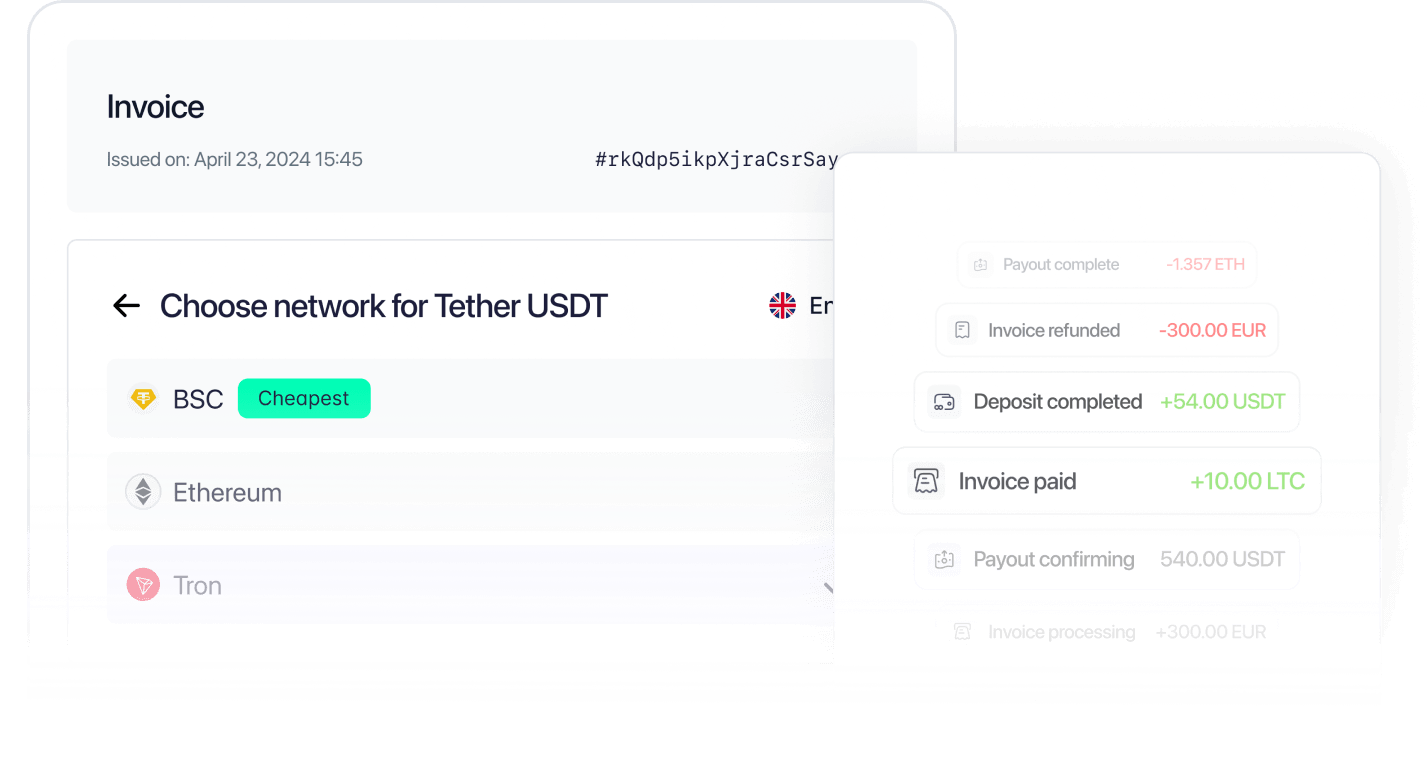
From the outside, this may look like additional complexity. In practice, the goal is often the opposite. Merchants want fewer surprises. They want easier access to alternative settlement options. They want the ability to adapt without rebuilding major parts of their existing setup. A business with several available routes usually has more room to respond when new requirements emerge.
What makes this trend worth watching is that it extends beyond large enterprises. Mid-sized companies are adopting similar strategies for many of the same reasons. Growth creates new requirements, but so does uncertainty. Regulations evolve. Markets change. New blockchain networks emerge. Businesses prefer not to place every critical process in one basket.
As a result, a crypto payment provider is increasingly evaluated as part of a wider strategy focused on flexibility and long-term control. The discussion is no longer limited to selecting the right partner. It is becoming a question of how much freedom a business wants to preserve when the environment around it inevitably changes.
Control is the real advantage
The idea behind a backup strategy is not preparing for the worst. It is preserving options. Merchants who rely on a single partner often discover their exposure only after conditions change. Those who build flexibility earlier usually have more room to respond. A crypto payment provider remains an important part of the equation, but long-term resilience ultimately depends on how much control a business maintains over its payment infrastructure. In a market shaped by changing regulations, evolving compliance requirements, and growing operational complexity, resilience is becoming just as important as payment acceptance itself.
Sheepy helps leading iGaming, FX, and E-commerce brands grow their crypto payments - trusted since 2022.


'%3e%3cpath%20d='M5.33337%2017.3333C5.76671%2020.7093%207.84137%2023.708%2010.6667%2025.3333'%20stroke='%231C1D3B'%20stroke-width='2'%20stroke-linecap='round'%20stroke-linejoin='round'/%3e%3cpath%20d='M26.6667%2014.6667C26.3406%2012.3203%2025.2521%2010.1462%2023.5688%208.47934C21.8856%206.81246%2019.701%205.74524%2017.3516%205.44209C15.0021%205.13893%2012.6182%205.61666%2010.5669%206.80168C8.51571%207.98669%206.911%209.81326%206%2012'%20stroke='%231C1D3B'%20stroke-width='2'%20stroke-linecap='round'%20stroke-linejoin='round'/%3e%3cpath%20d='M5.33337%206.66666V12H10.6667'%20stroke='%231C1D3B'%20stroke-width='2'%20stroke-linecap='round'%20stroke-linejoin='round'/%3e%3cpath%20d='M16%2020H18.6667C19.0203%2020%2019.3594%2020.1405%2019.6095%2020.3905C19.8595%2020.6406%2020%2020.9797%2020%2021.3333V22.6667C20%2023.0203%2019.8595%2023.3594%2019.6095%2023.6095C19.3594%2023.8595%2019.0203%2024%2018.6667%2024H17.3333C16.9797%2024%2016.6406%2024.1405%2016.3905%2024.3905C16.1405%2024.6406%2016%2024.9797%2016%2025.3333V26.6667C16%2027.0203%2016.1405%2027.3594%2016.3905%2027.6095C16.6406%2027.8595%2016.9797%2028%2017.3333%2028H20'%20stroke='%231C1D3B'%20stroke-width='2'%20stroke-linecap='round'%20stroke-linejoin='round'/%3e%3cpath%20d='M24%2020V22.6667C24%2023.0203%2024.1405%2023.3594%2024.3905%2023.6095C24.6406%2023.8595%2024.9797%2024%2025.3333%2024H26.6667'%20stroke='%231C1D3B'%20stroke-width='2'%20stroke-linecap='round'%20stroke-linejoin='round'/%3e%3cpath%20d='M28%2020V28'%20stroke='%231C1D3B'%20stroke-width='2'%20stroke-linecap='round'%20stroke-linejoin='round'/%3e%3c/g%3e%3cdefs%3e%3cclipPath%20id='clip0_17690_160'%3e%3crect%20width='32'%20height='32'%20fill='white'/%3e%3c/clipPath%3e%3c/defs%3e%3c/svg%3e)
'%3e%3cpath%20d='M10.6667%208.00001C10.6667%207.29277%2010.9477%206.61449%2011.4478%206.11439C11.9479%205.61429%2012.6262%205.33334%2013.3334%205.33334H24.0001C24.7073%205.33334%2025.3856%205.61429%2025.8857%206.11439C26.3858%206.61449%2026.6667%207.29277%2026.6667%208.00001V18.6667C26.6667%2019.3739%2026.3858%2020.0522%2025.8857%2020.5523C25.3856%2021.0524%2024.7073%2021.3333%2024.0001%2021.3333H13.3334C12.6262%2021.3333%2011.9479%2021.0524%2011.4478%2020.5523C10.9477%2020.0522%2010.6667%2019.3739%2010.6667%2018.6667V8.00001Z'%20stroke='%231C1D3B'%20stroke-width='2'%20stroke-linecap='round'%20stroke-linejoin='round'/%3e%3cpath%20d='M5.33337%2013.3333C5.33337%2012.6261%205.61433%2011.9478%206.11442%2011.4477C6.61452%2010.9476%207.2928%2010.6667%208.00004%2010.6667H18.6667C19.374%2010.6667%2020.0522%2010.9476%2020.5523%2011.4477C21.0524%2011.9478%2021.3334%2012.6261%2021.3334%2013.3333V24C21.3334%2024.7072%2021.0524%2025.3855%2020.5523%2025.8856C20.0522%2026.3857%2019.374%2026.6667%2018.6667%2026.6667H8.00004C7.2928%2026.6667%206.61452%2026.3857%206.11442%2025.8856C5.61433%2025.3855%205.33337%2024.7072%205.33337%2024V13.3333Z'%20stroke='%231C1D3B'%20stroke-width='2'%20stroke-linecap='round'%20stroke-linejoin='round'/%3e%3c/g%3e%3cdefs%3e%3cclipPath%20id='clip0_17690_177'%3e%3crect%20width='32'%20height='32'%20fill='white'/%3e%3c/clipPath%3e%3c/defs%3e%3c/svg%3e)