
 9 min reading
Tokenization is not just about property, stocks, or gold. Tokens have been used to represent cows, whiskey, uranium, and even pieces of internet history. These cases sound strange, but they raise a serious question: what exactly gets tokenized? A physical object does not simply move onto a blockchain. The token may represent ownership, income rights, access, or provenance. These ten unusual cases show how far that idea can stretch - and where its limits begin.
When tokenization gets weird: From cows to human skin
A cow may seem like the last thing blockchain needs. Yet cattle became one of the stranger examples of asset tokenization in Brazil. Investment fund Target FIDC structured a deal using ten cows as collateral. Each animal received a unique digital token linked to its digital identity. The farmer then used the cattle to support a 100,000-real loan. The cows stayed exactly where you would expect them - on the farm.
This distinction matters because the cow itself did not move onchain. Blockchain tokenization created a digital layer connected to the real animal. In this case, that layer helped identify cattle used as collateral. The token provided a digital link between each animal and the financing structure. This is a basic rule behind many tokenized real world assets.
A token can represent a right or claim without replacing the asset itself.
If tokenized cows sound unusual, human skin goes one step further. In 2021, tennis player Oleksandra Oliynykova auctioned an NFT linked to part of her right arm. The winner paid 3 ETH for advertising rights to that space. The area measured 15 by 18 centimeters. The NFT gave the buyer the right to select a tattoo for that space. Oliynykova would wear it during tennis tournaments for one year.
But describing this simply as "tokenized human skin" misses the point. The buyer did not own Oliynykova's skin or part of her body. The NFT represented advertising rights connected to a defined physical space. In that sense, the right was more important than the object. Similar advertising rights already exist in sports, where sponsors pay for space on shirts, helmets, and other surfaces. Tokenization gave this familiar commercial idea a very unusual digital form.
These two cases establish a useful rule for everything that follows. An underlying asset and a tokenized right are not the same thing. The chain is often simple: asset, legal or economic right, then token. What the token represents depends on how the deal is structured. Understanding that difference helps separate what was actually tokenized from a catchy blockchain headline. And as the next cases show, strange assets can still have familiar financial logic.
Whiskey, uranium and other assets you never expected onchain
Whiskey barrels may sound like an odd target for tokenization. Yet some casks can appreciate as the spirit matures. In 2021, UniCask divided a Springbank 1991 cask into 100 units. Each CASK NFT corresponded to one part of the whiskey inside. Holders could later exchange their tokens for whiskey after bottling. The barrel itself remained stored while the related rights became digital.
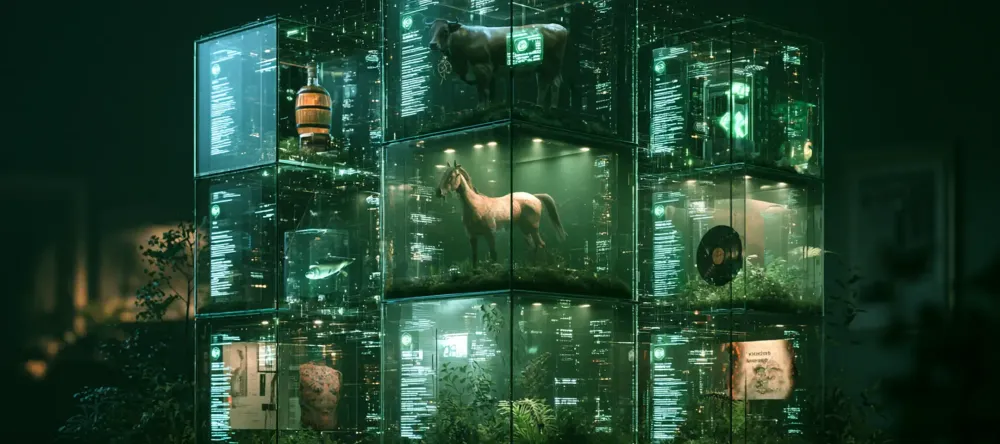
Racehorses take the same idea into a much less predictable market. Stablemans launched tokenized interests in real thoroughbred racehorses in 2025. Its fractional NFTs represent an ownership interest in individual horses. Holders can participate in race winnings, breeding income, and sale proceeds. They do not need to fund the entire cost of a horse. Yet their returns still depend on the animal and its real-world management.
Uranium pushes asset tokenization into even stranger territory. Uranium.io launched xU3O8 to provide fractional ownership of physical uranium concentrate. Each token represents a proportional beneficial ownership interest in stored U3O8. The uranium is held through Archax and stored at a regulated facility. Most holders cannot simply request physical delivery due to nuclear regulations. Instead, the token records their share of the uranium held in trust. This allows ownership to be represented and transferred through blockchain infrastructure.
These examples reveal the less bizarre side of tokenized assets. Whiskey, racehorses, and uranium look very different in the physical world. Yet each supports a defined ownership or economic interest represented digitally. Blockchain tokenization may make fractional access or transfers easier in some structures. It does not automatically create demand, liquidity, or enforceable ownership rights. Those still depend on markets, contracts, custody, and the legal setup. The asset may be strange, but the financial logic often is not.
Can you tokenize something that does not exist as an object?
Tokenization gets more interesting when there is no physical object to divide. Music offers a good example because much of its value comes later. A song can keep producing streaming royalties long after its release. In 2021, producer 3LAU tested this idea through his platform Royal. He gave 333 fans tokens linked to his single "Worst Case". Together, those tokens represented rights to a share of the song's streaming royalty income.
This was more than a digital collectible tied to a song. Token holders were entitled to a share of streaming royalty income. In 2022, Royal began distributing actual royalty payments to eligible holders. The value therefore came partly from future streams that had not happened yet. Nobody had to divide a physical object into 333 pieces. Instead, tokenization divided an economic right linked to future income.
The underlying asset and the income claim were separate parts of the structure.
Rapper Nas took the model further in early 2022. He released tokens tied to "Ultra Black" and "Rare" through Royal. Different token tiers represented different shares of each track's streaming royalties. Buyers could therefore gain exposure to income generated by specific songs. They could later receive royalty payments based on the rights they held. The music itself remained separate from those economic rights.
These cases show a different side of digital asset tokenization. A whiskey token can relate to something already sitting in storage. Tokenized music royalties point toward cash flows that have not arrived yet. Their value depends on future listening and the revenue those streams produce. The token does not need to represent the underlying asset itself. It can instead represent a defined economic claim linked to that asset. Sometimes the key asset is not a thing at all - it is the right to receive money later.
When culture becomes an asset: tweets, art and internet history
In 2021, Jack Dorsey's first tweet sold as an NFT. The price was more than $2.9 million. Yet buyer Sina Estavi did not gain control of the tweet. The post remained visible online for anyone to read. The NFT worked more like a digital certificate tied to it. This difference matters when tokenization meets internet history.
Banksy's "Morons" pushed that question into the physical art world. A crypto group bought a print for about $95,000 in 2021. It then burned the physical work during a livestream. The group issued an NFT that memorialized the destroyed artwork. That NFT later sold for 228.69 ETH. Yet owning it did not automatically transfer every right linked to Banksy's work. Copyright and token ownership remained separate questions.
Internet history produced an even stranger example that same year. Tim Berners-Lee offered an NFT of the World Wide Web's original source code. It sold through Sotheby's for $5.4 million. The auction lot covered four elements: original time-stamped source files, a visualization, a digital poster, and a letter. These were specific digital artifacts offered by the web's creator. But the buyer did not purchase ownership or control of the World Wide Web itself.
These three cases expose a common myth about blockchain tokenization. Owning a token does not automatically mean owning everything behind it. Copyright, control, legal ownership, and provenance can remain separate. The exact rights depend on the terms attached to each token. That is why "what was tokenized?" matters more than the headline. Digital ownership only makes sense when we know what the token actually gives its holder.
If almost anything can be tokenized, what comes next?
The ten cases above look very different at first. Yet they share one basic idea: a token can represent a defined asset or right. But creating a token is only the first step. The harder questions begin when that token starts moving between people.
A transfer may simply move a digital asset between two parties. But a sale adds another part to the transaction: payment. The asset moves one way, while money moves the other. That creates a need for settlement. In financial markets, linking these movements can reduce the risk that only one side performs.
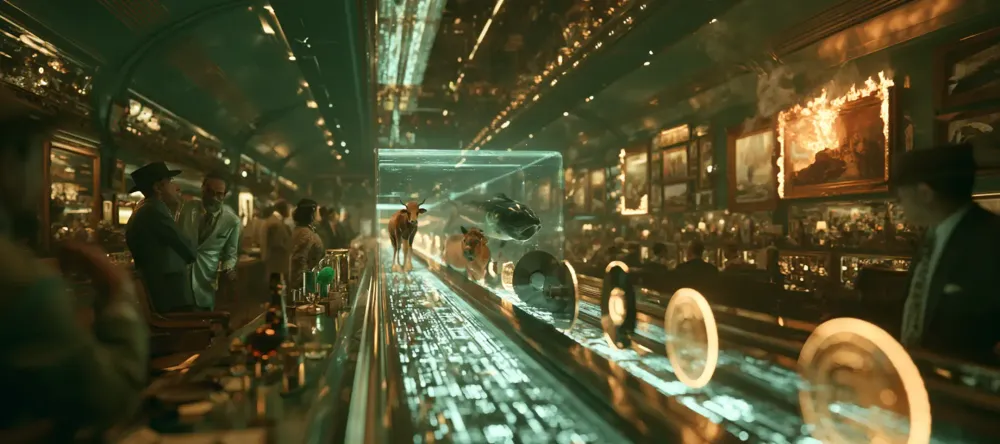
This is where tokenization starts to meet payment infrastructure. Stablecoin payments can provide one form of digital value for on-chain settlement. Tokenized bank deposits and other forms of digital money are also being tested. In 2025, Kinexys by J.P. Morgan and Ondo completed a cross-chain settlement test using Chainlink infrastructure. Ondo's tokenized U.S. Treasury fund formed the asset leg. The payment leg used USD deposits at JPMorgan and was settled through Kinexys Digital Payments, while Chainlink coordinated the transaction across the networks.
Still, there is no single settlement model for every tokenized asset. Stablecoins can support programmable settlement, but they also carry design and regulatory risks. Bank-based money and traditional payment rails may remain important in other structures. Current projects are testing several approaches rather than one universal answer. The right model can depend on the asset, market, regulation, and parties involved.
That is the larger pattern behind these strange tokenization examples. First comes representation, then transfer, and finally the question of settlement. This increases the importance of settlement infrastructure that can connect digital ownership with different forms of payment. Such infrastructure may span banking systems, blockchain payment rails, and on-chain settlement. The future may therefore depend less on what can be tokenized. The harder question is how ownership and value can move together safely.
The token is only half the story
The strangest part of tokenization is not that tokens can be linked to cows, whiskey, or internet history. It is how differently a token can relate to what sits behind it. Sometimes it represents ownership. Sometimes it represents income, access, or provenance. These experiments are not a map of the future. They test the boundaries of what can be represented, owned, and transferred digitally. The harder question is not what we can tokenize, but what owning that token actually means.
Sheepy helps leading iGaming, FX, and E-commerce brands grow their crypto payments - trusted since 2022.


'%3e%3cpath%20d='M5.33337%2017.3333C5.76671%2020.7093%207.84137%2023.708%2010.6667%2025.3333'%20stroke='%231C1D3B'%20stroke-width='2'%20stroke-linecap='round'%20stroke-linejoin='round'/%3e%3cpath%20d='M26.6667%2014.6667C26.3406%2012.3203%2025.2521%2010.1462%2023.5688%208.47934C21.8856%206.81246%2019.701%205.74524%2017.3516%205.44209C15.0021%205.13893%2012.6182%205.61666%2010.5669%206.80168C8.51571%207.98669%206.911%209.81326%206%2012'%20stroke='%231C1D3B'%20stroke-width='2'%20stroke-linecap='round'%20stroke-linejoin='round'/%3e%3cpath%20d='M5.33337%206.66666V12H10.6667'%20stroke='%231C1D3B'%20stroke-width='2'%20stroke-linecap='round'%20stroke-linejoin='round'/%3e%3cpath%20d='M16%2020H18.6667C19.0203%2020%2019.3594%2020.1405%2019.6095%2020.3905C19.8595%2020.6406%2020%2020.9797%2020%2021.3333V22.6667C20%2023.0203%2019.8595%2023.3594%2019.6095%2023.6095C19.3594%2023.8595%2019.0203%2024%2018.6667%2024H17.3333C16.9797%2024%2016.6406%2024.1405%2016.3905%2024.3905C16.1405%2024.6406%2016%2024.9797%2016%2025.3333V26.6667C16%2027.0203%2016.1405%2027.3594%2016.3905%2027.6095C16.6406%2027.8595%2016.9797%2028%2017.3333%2028H20'%20stroke='%231C1D3B'%20stroke-width='2'%20stroke-linecap='round'%20stroke-linejoin='round'/%3e%3cpath%20d='M24%2020V22.6667C24%2023.0203%2024.1405%2023.3594%2024.3905%2023.6095C24.6406%2023.8595%2024.9797%2024%2025.3333%2024H26.6667'%20stroke='%231C1D3B'%20stroke-width='2'%20stroke-linecap='round'%20stroke-linejoin='round'/%3e%3cpath%20d='M28%2020V28'%20stroke='%231C1D3B'%20stroke-width='2'%20stroke-linecap='round'%20stroke-linejoin='round'/%3e%3c/g%3e%3cdefs%3e%3cclipPath%20id='clip0_17690_160'%3e%3crect%20width='32'%20height='32'%20fill='white'/%3e%3c/clipPath%3e%3c/defs%3e%3c/svg%3e)
'%3e%3cpath%20d='M10.6667%208.00001C10.6667%207.29277%2010.9477%206.61449%2011.4478%206.11439C11.9479%205.61429%2012.6262%205.33334%2013.3334%205.33334H24.0001C24.7073%205.33334%2025.3856%205.61429%2025.8857%206.11439C26.3858%206.61449%2026.6667%207.29277%2026.6667%208.00001V18.6667C26.6667%2019.3739%2026.3858%2020.0522%2025.8857%2020.5523C25.3856%2021.0524%2024.7073%2021.3333%2024.0001%2021.3333H13.3334C12.6262%2021.3333%2011.9479%2021.0524%2011.4478%2020.5523C10.9477%2020.0522%2010.6667%2019.3739%2010.6667%2018.6667V8.00001Z'%20stroke='%231C1D3B'%20stroke-width='2'%20stroke-linecap='round'%20stroke-linejoin='round'/%3e%3cpath%20d='M5.33337%2013.3333C5.33337%2012.6261%205.61433%2011.9478%206.11442%2011.4477C6.61452%2010.9476%207.2928%2010.6667%208.00004%2010.6667H18.6667C19.374%2010.6667%2020.0522%2010.9476%2020.5523%2011.4477C21.0524%2011.9478%2021.3334%2012.6261%2021.3334%2013.3333V24C21.3334%2024.7072%2021.0524%2025.3855%2020.5523%2025.8856C20.0522%2026.3857%2019.374%2026.6667%2018.6667%2026.6667H8.00004C7.2928%2026.6667%206.61452%2026.3857%206.11442%2025.8856C5.61433%2025.3855%205.33337%2024.7072%205.33337%2024V13.3333Z'%20stroke='%231C1D3B'%20stroke-width='2'%20stroke-linecap='round'%20stroke-linejoin='round'/%3e%3c/g%3e%3cdefs%3e%3cclipPath%20id='clip0_17690_177'%3e%3crect%20width='32'%20height='32'%20fill='white'/%3e%3c/clipPath%3e%3c/defs%3e%3c/svg%3e)